While travelling or living in an RV, one of the essential things to remember to do is to insulate your RV for winter temperatures. Campervans and RVs can become frigid and cause extreme discomfort since a substantial amount of heat escapes through windows during the cold months.
Most RVs have single-pane windows that don’t offer good insulation. Replacing RV windows with insulated windows can get expensive. However, there are many economical ways to insulate RV windows without having to replace them.
Why is it necessary to insulate RV windows for winter?
Insulating RV windows can have many benefits in terms of cost-saving, health and safety. Adding an insulation layer to your RV’s windows can help cut heating costs by not allowing heat to escape in cold weather, thus saving energy. It can help decrease frequent use and wear-and-tear of your heating and AC system.
Using alternative ways to heat your RVs can also cause potential safety hazards. Heating techniques such as gas heaters, running stoves or any heaters which burn fuel require proper ventilation. Without such arrangements, your RV can be filled with carbon monoxide or other harmful gases.
As moisture is more likely to form on RV windows by condensing humidity and also cause mould to grow, it is necessary to insulate RV windows during winter.
How does RV insulation work?
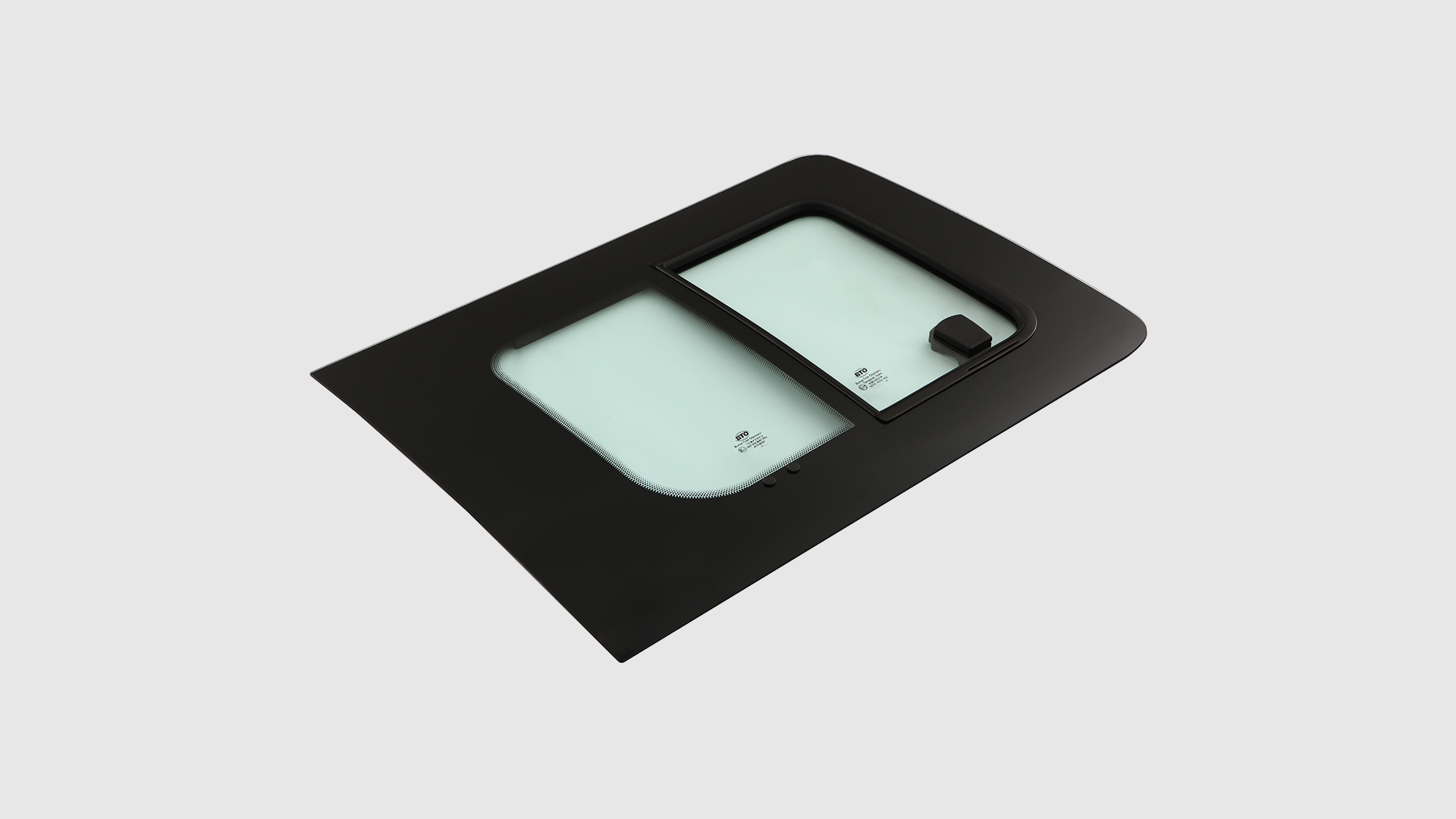
Bonded fixed and sliding windows in RVs require an extra layer where the air gets trapped and prevents heat from escaping too quickly. You can tell when the heat is escaping through your windows by touching them. If it feels cold to touch, that means that the heat is escaping through them.
By creating a layer of insulation, your RV can be easily kept warm during winter without having to spend too much time and money. Here are five ways you can insulate your RVs and camper vans for winter.
4 Types of RV Insulations for Winter
1. Install Reflective Insulation:
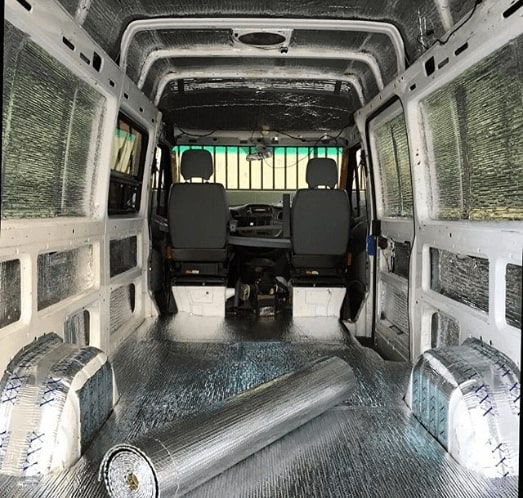
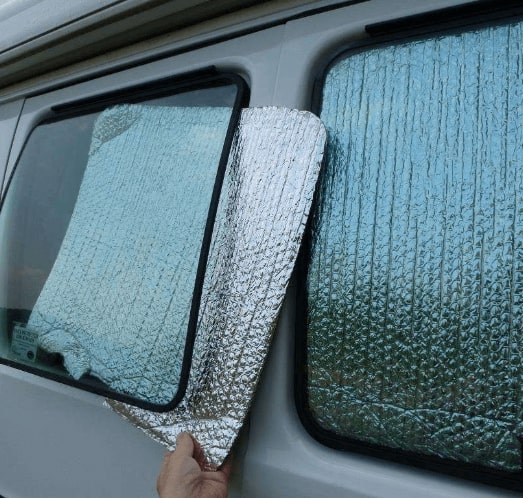
Reflective insulation consists of layering a reflective material, usually, aluminium attached with plastic or cardboard with air bubbles. The reflective side keeps the heat from escaping, so it is advised to install the shiny side towards the RV interior. It is a great way to prevent the heat from escaping and be installed for both bonded fixed windows and sliding windows.
However, reflective insulation can also block out sunlight, so it should be used in spaces where sunlight is not a big necessity. Most RV users also like to put up reflective insulation at nighttime and remove them during the day.
2. Use Bubble Wrap as Insulators:
Bubble wraps are excellent for trapping heat as the “bubbles” provide air pockets where heat can get trapped. These can either be placed on the inside or outside part of the windows. The best way to put up bubble wrap is by placing the bubble side towards the window. Thicker bubble wraps are better to help with the insulation.
First, the glass needs to be dampened to cover up the windows, a spray bottle or a damp rag can help with this. Next, the bubble wrap should be placed on the windows and have them stick on. This will stay in place for the entire winter. If the bubble wrap falls apart, you can dampen the surface to stick it back.
3. Hang Insulated RV Window Curtains:
Curtains made from thick and dark materials can help insulate the windows. The curtains’ thickness will prevent the heat from escaping easily, and dark colours will provide privacy. Insulating curtains can be made from quilted or polar fabrics. These curtains are best suited for bonded sliding windows as the curtains can be hung over the windows and don’t need sticking on the windows. This will allow you to slide the windows open during the day time to let the sunlight in.
4. Use Shrink Wrap on the RV Windows:
You can buy shrink wrap kits to cover your windows. They reduce heat loss and prevent the infiltration of cold air from outside. The plastic films can be placed over the windows by sticking them in place with a double-sided tape around the window. Once the shrink wrap has been completely placed over the window frame, you can use a blow dryer to shrink it and smoothen out the edges. This traps a layer of air that acts as the insulator. It will help keep the windows draft proof and is an easy and efficient way to insulate your RV windows.
Insulating RV windows are necessary to improve the RV lifestyle during the winter. While most RVs have single-pane windows, insulating RV windows can be as easy as sticking bubble wrap to your windows or adding shrink wrap over windows.
OUR LATEST BLOGS
READ THE LATEST FROM EMPRISE GLOBAL FOR GUIDES & TIPS